715 entries mapped in just three months (including Producer Responsibility Organisations and national registers) covering the management of 26 waste streams (such as packaging, WEEE, batteries, textiles, and single-use plastics) across the 27 EU Member States, with the goal of identifying strengths, weaknesses, harmonization opportunities and creating a European wide register for all stakeholders in the value chain.
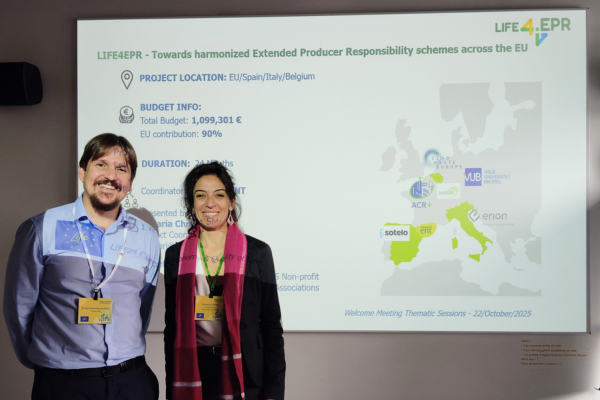
Milan, 3rd December 2025 – The first European mapping of Extended Producer Responsibility (EPR) systems and Producer Responsibility Organisations (PROs) has been completed as part of the two-year LIFE4EPR project, funded by the European Union. The mapping lays the groundwork for the creation of a pilot EU-wide register, enabling a more coordinated, transparent, efficient, and harmonized EPR framework.
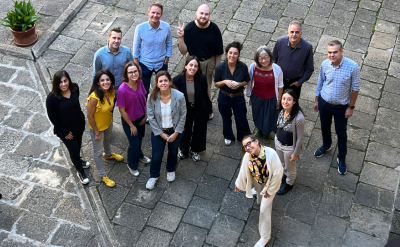
To achieve this objective, the project’s seven partners (Fundació ENT – Coordinator of the project, ACR+, WEEE Forum, Zero Waste Europe, Erion, Sotelo, Vrije Universiteit Brussel) collected and validated, in just three months, around 715 total entries, including 429 PROs, 48 national registers, and other key actors involved in the management of 26 waste streams – from packaging to WEEE, from batteries to textiles, and single-use plastics – covering all 27 EU Member States.
The EU mapping reveals the EPR “gap”: solid systems for packaging and WEEE, textile still evolving
The mapping highlights substantial differences in the maturity and operational status of the various schemes. Packaging and WEEE emerge as sectors with mature systems supported by consolidated regulatory frameworks, while emerging areas such as textiles show structures still in development, though rapidly evolving.
The analysis delved deep into the details, often breaking down waste streams into legally defined subcategories, such as different types of packaging or specific WEEE categories. This level of granularity makes it possible to understand not only whether an EPR scheme exists, but also how it is structured operationally and the level of its implementation.
EPR in Europe: France, Spain and Poland lead in a still fragmented landscape
Coverage varies greatly from country to country and from one waste stream to another: for streams such as packaging, WEEE and batteries, many Member States have multiple organisations involved—an indication of different markets and diverse approaches. The mapping also highlights well-established systems, such as those for packaging and WEEE, alongside newer sectors like textiles, which are still undergoing major development.
The analysis is highly detailed and takes into account the individual subcategories defined by the legislation, such as specific types of packaging or categories of electrical and electronic equipment.
This exercice allows supports comparisons and benchmarking activities and represents a valuable resource for policymakers and stakeholders engaged in the harmonization process. The mapping data will be shared on a publicly accessible online platform, providing transparent and up-to-date information to enhance stakeholder engagement and improve understanding of EPR systems across the European Union. It will also enable stakeholders to access comparable information between countries and waste streams, facilitating the exchange of good practices and supporting the harmonization of EPR rules at European level.
“This mapping represents a decisive step toward a Europe where Extended Producer Responsibility is finally coordinated and transparent,” says Pascal Leroy, Director General of the WEEE Forum. “For the first time, we have a complete picture of the differences between countries, of the strengths and weaknesses. This tool will allow the entire value chain to work with greater clarity and accelerate the harmonization process needed to tackle the challenges of the circular economy.”