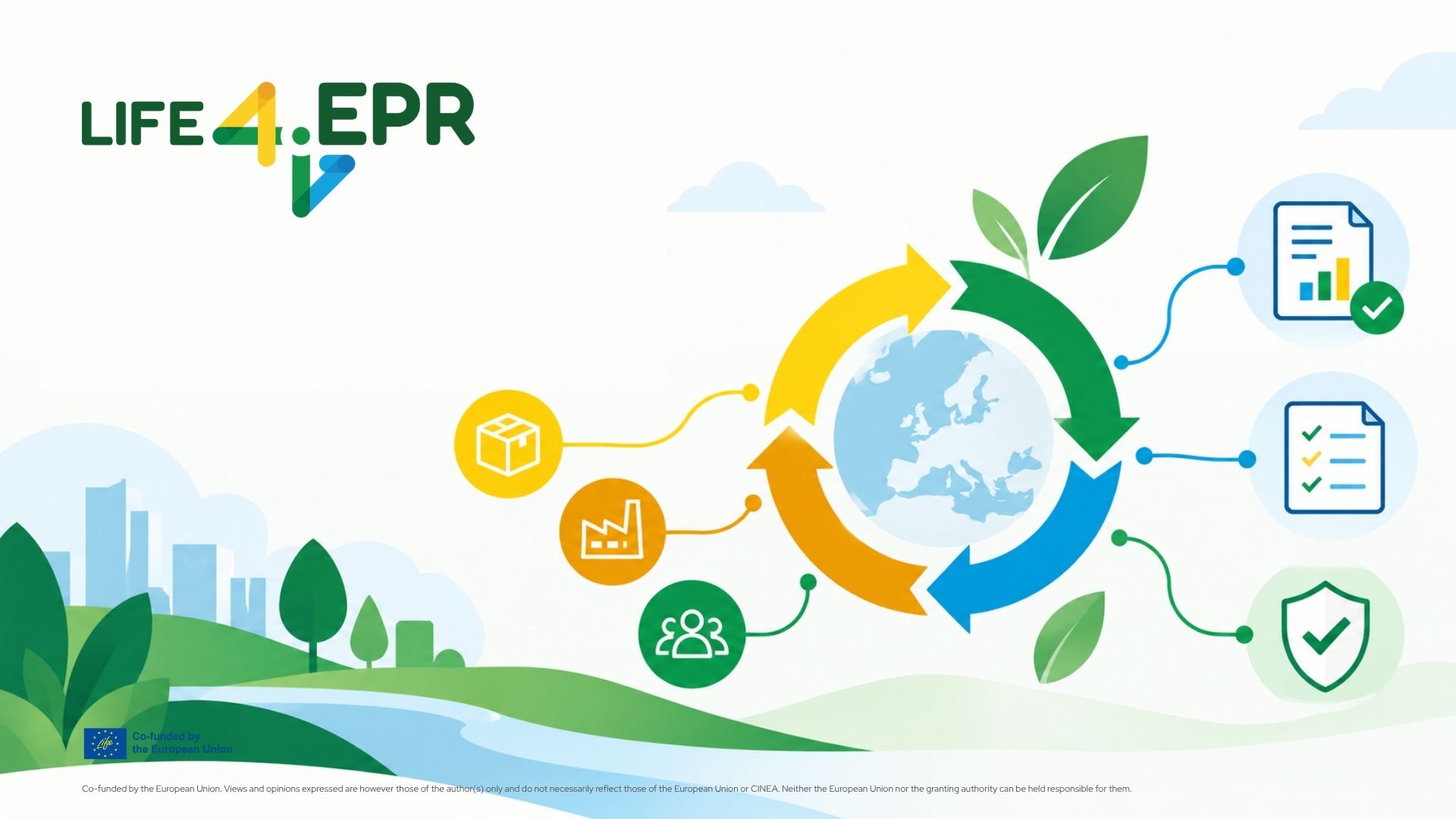
LIFE4EPR, led by Fundació ENT, aims to harmonize and digitalize Extended Producer Responsibility (EPR) schemes across Europe. The project combines stakeholder mapping, policy benchmarking, and the creation of a pilot EU-wide producers/products registry to support future harmonization. By improving circularity and policy coherence, LIFE4EPR contributes to the EU Green Deal and the Circular Economy Action Plan.
As the coordinator, what strategic value does Fundació ENT bring to LIFE4EPR?
Fundació ENT brings deep expertise in waste management and environmental policy at all governance levels —from local to European. With experience coordinating EU projects like LIFE BIOBEST and H2020 Biocircularcities, we ensure strong leadership, including financial and adminstrative support, efficient implementation, technical credibility, and stakeholder engagement. Our wide network also supports effective dissemination enhancing the project’s visibility and policy impact.
What innovative approaches or tools is LIFE4EPR using to improve EPR models in Europe?
LIFE4EPR’s core innovation lies in the development of a comprehensive mapping of EPR and related stakeholders schemes across the EU, complemented by the creation of a pilot producers/products registry to test a unified data system. This EU-wide mapping will serve as a key reference tool for the European Commission to assess and compare EPR systems and to support future harmonization efforts. In parallel, the project incorporates policy benchmarking, stakeholder consultation, data analysis, and co-creation of a concept for an EU-wide register of producers/products. Each partner plays a vital role in this process: Fundació ENT leads the design and development of the pilot registry platform, with SOTELO programming the user interface; ACR+ provides local data expertise and promotes replicability among cities and regions through its networks; WEEE Forum contributes its expertise on e-waste and access to the WEEE Directory; ZWE brings in civil society perspectives and helps shape EU-level recommendations; ECO ensures strategic communication and represents the producer perspective; and VUB validates the methodologies to ensure scientific and analytical rigour.
How does LIFE4EPR support the EU’s green transition?
By streamlining EPR schemes across Europe, LIFE4EPR boosts circularity, resource efficiency, stakeholders involvenent and policy coherence. EPR scheme mapping will directly feed into future EU policy, helping monitoring tasks, standardize responsibilities, close material loops, and reduce environmental impact. This contributes to the broader objectives of the Green Deal and the Circular Economy Action Plan, offering practical tools for regulators and stakeholders alike. Additionally, this project is aligned with the upcoming Circular Economy Act that will tackle the harmonization and digitalisation of EPR schemes.